
How to Choose the Right Carry-On Luggage: 9 Features That Really Matter
Learning how to choose the right carry-on luggage can feel surprisingly complicated. At first glance, most suitcases look similar. They have wheels, handles, compartments, and enough room for a few days’ worth of clothing.
But once you begin traveling with one, the differences become obvious.
A suitcase that is too heavy, difficult to maneuver, or slightly too large can create unnecessary frustration before your trip even begins. The right carry-on should make traveling easier—not give you one more thing to wrestle with at the airport.
Before buying your next suitcase, look beyond the color and price. These nine features can make a real difference in how well your luggage performs from departure to arrival.
1. The Correct Carry-On Size
Size should be the first consideration because a suitcase is only useful as a carry-on if the airline allows it in the cabin.
Many major U.S. airlines use a maximum carry-on size of approximately 22 x 14 x 9 inches, including the wheels and handles. American Airlines and Delta currently publish this size limit for standard carry-on bags. However, requirements can vary by airline, ticket type, aircraft, and destination. The TSA does not establish airline carry-on dimensions; it advises travelers to check directly with their airline. (American Airlines, Delta Air Lines, TSA)
Pay close attention to whether the dimensions listed by the luggage manufacturer include the wheels and handles. Sometimes the interior packing compartment fits within the limit while the suitcase’s total exterior dimensions do not.
If you regularly fly with one particular airline, check its baggage policy before purchasing. If you use several airlines, especially international or budget carriers, choose a slightly smaller suitcase that meets the most restrictive requirements you are likely to encounter.
Traveler’s Desk Tip: Check your airline’s current carry-on allowance before every trip. Baggage rules can change, and a connecting flight may be operated by a different airline.
Because airline limits vary, review our carry-on luggage size guide before choosing a bag.
2. Overall Weight
An empty suitcase can weigh anywhere from just a few pounds to nearly half of some airlines’ carry-on weight allowance.
Even when an airline does not routinely weigh cabin luggage, a lighter suitcase is still easier to lift into an overhead bin, roll through a large airport, carry up stairs, and place in a car or hotel luggage rack.
A lightweight suitcase also leaves more of your baggage allowance available for the belongings you actually want to pack.
However, the lightest suitcase is not automatically the best one. Extremely lightweight materials may provide less protection or durability. Look for a sensible balance between low weight and sturdy construction.
When comparing suitcases, always check the product’s empty weight. This detail can be easy to overlook when shopping online.
3. Hard-Shell or Soft-Sided Construction
Both hard-shell and soft-sided luggage can be good choices. The better option depends on how and where you travel.
Hard-shell luggage
Hard-shell suitcases offer a structured exterior that can help protect fragile or breakable items. They are usually easy to wipe clean and may provide better resistance to rain and spills.
The disadvantages are that scratches and scuffs may be more noticeable, and the rigid exterior offers less flexibility when you need to squeeze the bag into a tight space.
Soft-sided luggage
Soft-sided luggage is typically more flexible and often includes convenient exterior pockets. Those pockets can be helpful for storing items you want to reach quickly, such as travel documents, reading material, or a light jacket.
However, fabric luggage may absorb moisture more easily and generally offers less protection from impact.
Neither type is right for everyone. Consider whether you value structure and protection or flexibility and easy-access storage.
4. Strong, Smooth-Rolling Wheels
Wheels can determine whether your suitcase feels effortless or exhausting.
Most modern carry-ons have either two wheels or four spinner wheels.
Two-wheel suitcases are pulled behind you and may perform better on uneven sidewalks, curbs, and rough surfaces. Because the wheels are partially recessed, they may also be less exposed to damage.
Four-wheel spinner luggage can move in multiple directions and roll beside you instead of only behind you. This makes it easier to navigate airport lines, narrow airplane aisles, hotel lobbies, and crowded terminals.
Whichever style you prefer, look for wheels that feel sturdy and roll smoothly without wobbling. If possible, test the suitcase on more than a perfectly polished store floor.
Remember that wheels are included when airlines measure the total exterior dimensions of a carry-on.
5. A Comfortable Telescoping Handle
The handle is another feature that may not seem important until you are walking through a large airport.
A good telescoping handle should extend and retract smoothly, lock securely into place, and feel stable when the suitcase is full. A handle that twists, rattles excessively, or becomes stuck can make the entire bag difficult to control.
Adjustable height settings are especially helpful. The handle should extend far enough that you can roll the suitcase comfortably without bending forward or repeatedly bumping the bag against your heels.
Also check the suitcase’s top and side carry handles. Cushioned, securely attached handles make it easier to lift the bag into an overhead compartment or remove it from a vehicle.
6. A Practical Interior Layout
A well-designed interior helps you use the available space more effectively.
Useful interior features may include:
- Zippered dividers
- Compression straps or panels
- Mesh pockets
- Small accessory compartments
- A separate area for shoes or laundry
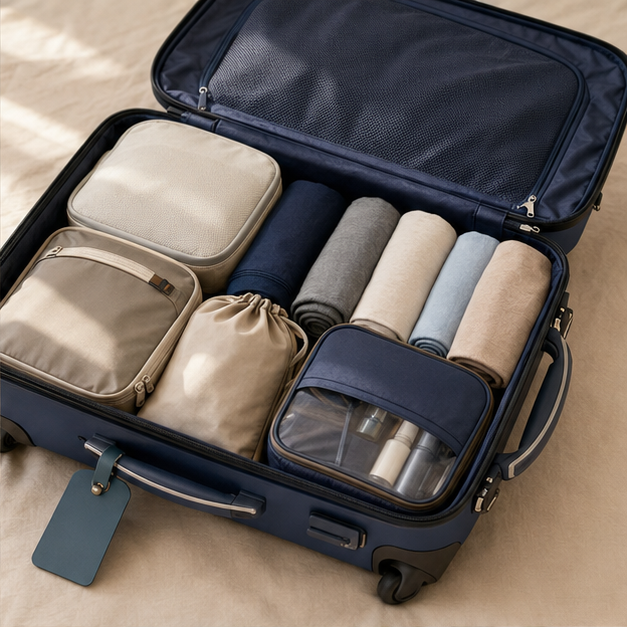
The best layout depends on your packing style. Some travelers like several compartments, while others prefer one open space that can be organized with packing cubes.
Avoid being distracted by an abundance of pockets that you may never use. Every divider, zipper, and built-in organizer adds some weight and takes up a little space.
Look for a layout that helps you stay organized without making the suitcase unnecessarily complicated.
7. Durable Materials and Construction
A carry-on may encounter conveyor belts, overhead bins, uneven pavement, rain, and occasional gate-checking. It needs to withstand more than a quiet ride through the airport.
For hard-shell luggage, commonly used materials include polycarbonate, polypropylene, and ABS. Polycarbonate is often valued for its balance of flexibility and impact resistance. Polypropylene can be lightweight and durable, while ABS is frequently more affordable but may be less resistant to repeated impact.
For soft-sided luggage, look for tightly woven, abrasion-resistant fabric and reinforced seams.
Regardless of the exterior material, examine the areas most likely to fail:
- Wheels
- Zippers
- Handles
- Corners
- Seams
- Interior lining
A long warranty can be reassuring, but read the details. Some warranties cover manufacturing defects while excluding ordinary wear, airline damage, or broken components.
8. Reliable Zippers and Security Features
A broken zipper can turn an otherwise excellent suitcase into a travel problem.
Look for zippers that move smoothly around corners and do not catch on the lining. Larger zipper pulls are usually easier to grip, especially when the suitcase is full.
Some luggage includes puncture-resistant or double-coil zippers designed to provide additional protection. Zipperless luggage uses latches instead, although that style may weigh more and offer less packing flexibility.
An integrated lock can be convenient, but it should not be the only reason you select a suitcase. A lock may discourage casual tampering, but it cannot make luggage completely secure.
If you choose a suitcase with a built-in lock, make sure you understand how to set and reset the combination before leaving home.
9. Expandability—With One Important Caution
An expandable suitcase gives you additional packing room when you need it. This can be useful when returning home with souvenirs or when packing for a longer trip.
However, expansion can create a problem: a suitcase that meets carry-on requirements when closed may exceed the permitted depth after it is expanded.
That could result in the bag being rejected at the gate or requiring it to be checked.
Expansion is still a useful feature, but think of it as an option rather than permission to overpack. If you use it, measure the fully packed suitcase before heading to the airport.
Expansion can be especially valuable when you plan to carry the suitcase onto the outbound flight but are willing to check it on the return trip.
Other Details Worth Considering
Once the essential features are covered, a few smaller details can help you choose the right carry-on luggage when comparing otherwise similar suitcases.
Color and visibility
Black luggage is classic and easy to match, but a less common color can be easier to identify if your carry-on must be gate-checked.
Interior lining
A removable or wipe-clean lining can make spills easier to manage.
Charging ports
Some suitcases include an external USB port, but the portable battery is usually sold separately. Airline and security rules apply to lithium batteries, so understand how the feature works before traveling.
Replacement parts
Suitcases with replaceable wheels or handles may last longer than bags with components that cannot be repaired.
Warranty and customer service
A dependable company should clearly explain what its warranty covers, how claims are submitted, and whether replacement parts are available.
Does Price Help You Choose the Right Carry-On Luggage?
A higher price does not always guarantee a better suitcase. At the same time, the least expensive option may not be economical if a wheel, zipper, or handle fails after only a few trips.
Consider how often you travel.
An occasional traveler may be perfectly satisfied with an affordable, well-reviewed suitcase. A frequent traveler may benefit from paying more for stronger components, better maneuverability, repair options, and a longer warranty.
Focus on the quality of the features you will actually use instead of paying extra for a brand name or trendy additions that do not improve your trip.
How to Choose the Right Carry-On Luggage With Confidence
The right carry-on is not necessarily the most expensive, stylish, or feature-packed suitcase. It is the one that fits your airline’s requirements, suits your packing habits, and remains comfortable to handle throughout your journey.
Before you choose the right carry-on luggage, compare its exterior dimensions, empty weight, wheels, handle, construction, organization, and warranty. If possible, test how it rolls and lifts before purchasing.
A thoughtfully chosen carry-on can serve you for years—and make every trip feel a little more organized from the moment you leave home.

One Comment
Comments are closed.